Creamy White Wine Halibut
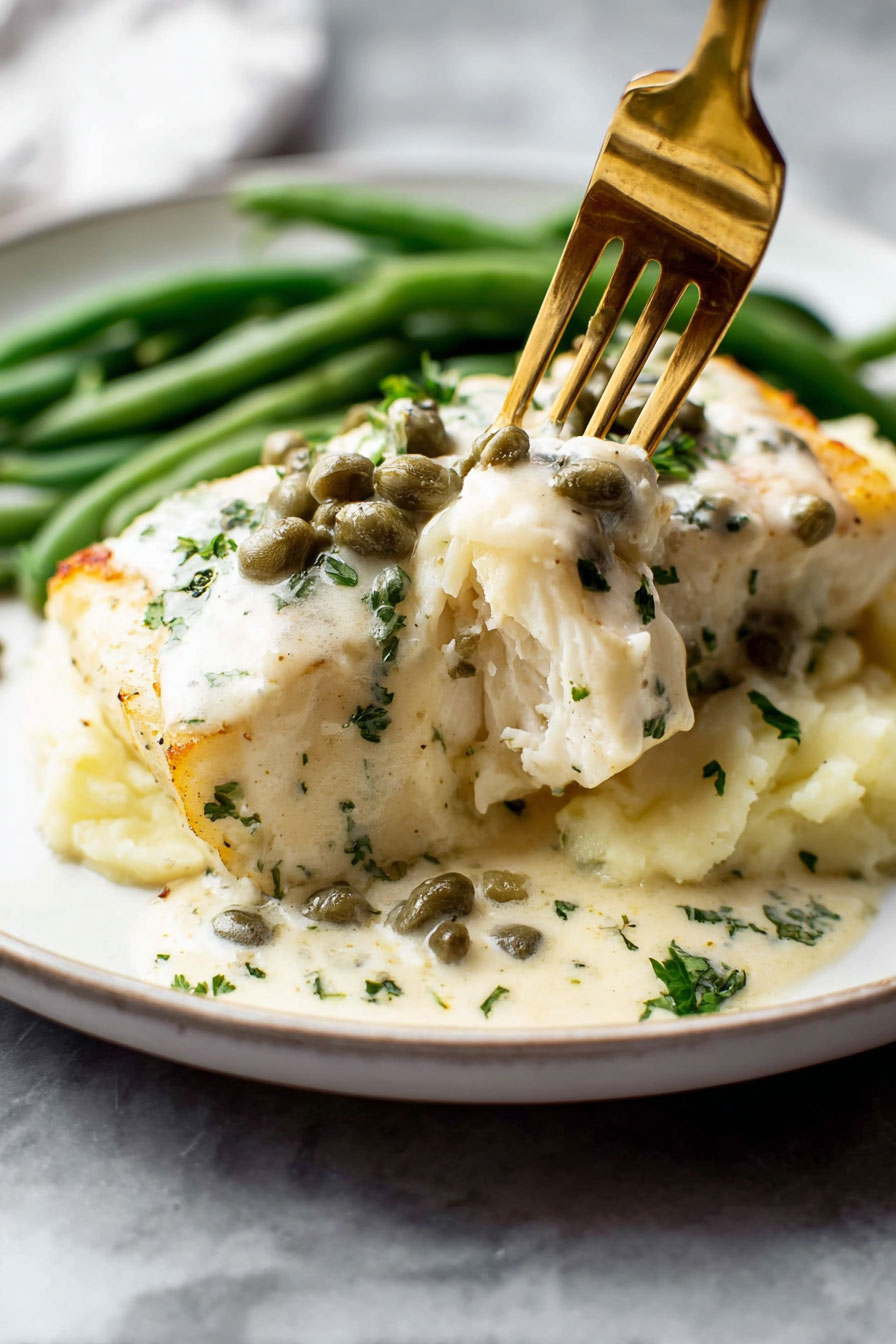
Let me be honest with you. The first time I made this dish, I couldn’t believe something this good came together in under 30 minutes. It tastes like something you’d order at a nice seafood restaurant. But it’s made right in your own kitchen — in one pan.
This creamy white wine halibut has become one of my go-to weeknight meals. And yes, it works just as well for a dinner party.
Pair it with mashed potatoes, buttered rice, or a thick slice of crusty bread. You’ll want something to soak up every last drop of that sauce.
Why This Recipe Works
Halibut is a fantastic fish to cook. Here’s why I keep coming back to it:
- It has a mild, slightly sweet flavor — not “fishy” at all
- The texture is firm and flaky, so it holds up well in sauces
- It sears beautifully without falling apart
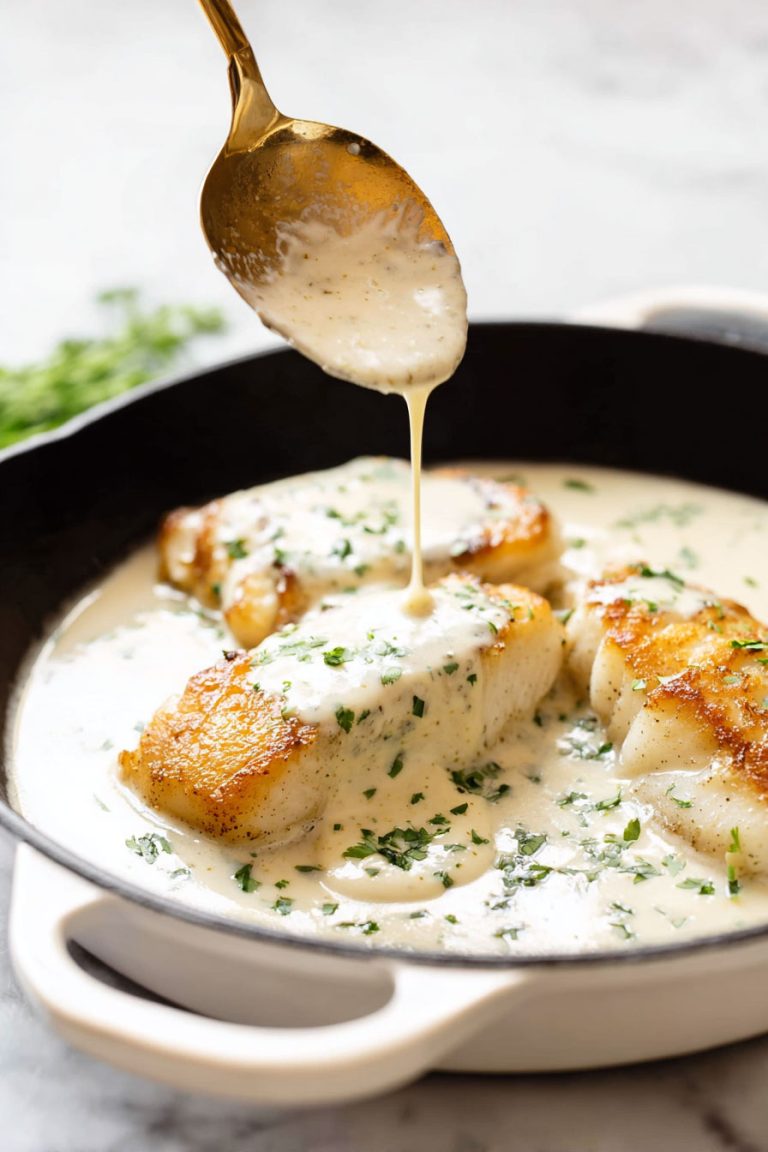
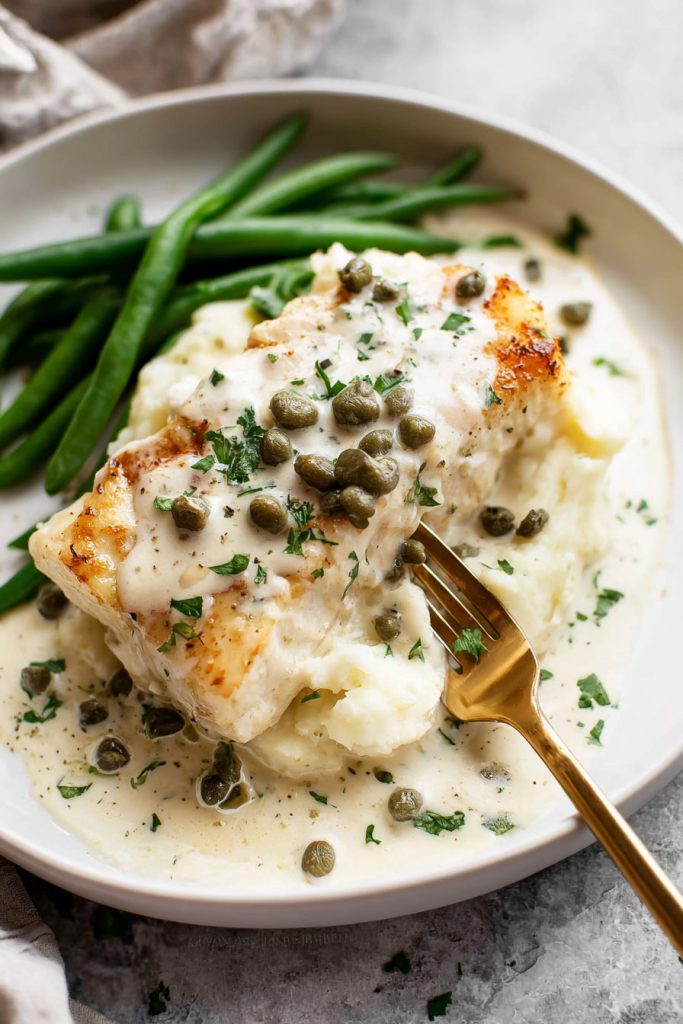
In this recipe, each fillet gets lightly pan-seared until golden and crispy on the outside. Then it gets nestled into a silky white wine cream sauce with garlic, lemon, and herbs.
The result? Tender, melt-in-your-mouth fish with a sauce so good you’ll be spooning it straight from the pan.
What really makes this dish stand out is the balance. The butter and cream give it that rich, indulgent feel. But the white wine, lemon juice, and capers cut right through the richness and keep things fresh and bright. It’s comforting and light at the same time — which is a rare thing.
And the best part? One pan. Minimal cleanup.
What You’ll Need
Here’s a full breakdown of the ingredients and why each one matters:
| Ingredient | Amount | Why It’s Important |
|---|---|---|
| Halibut fillets | 4 (6 oz each) | Firm, mild white fish that holds up in creamy sauces |
| Garlic powder | 1/2 tsp | Seasons the fish before searing |
| Salt & pepper | To taste | Enhances natural flavor |
| Flour | 1/2 tbsp + extra for dredging | Creates a golden crust and slightly thickens the sauce |
| Butter (divided) | 3 tbsp | Richness + the base for your sauce |
| Fresh garlic (minced) | 3 cloves | Bold, aromatic flavor — don’t skip this |
| Dry white wine | 1/3 cup | Adds depth and a subtle tang (Sauvignon Blanc or Pinot Grigio work great) |
| Heavy cream | 1 cup | Makes the sauce luscious and velvety |
| Lemon juice | 1 tsp | Brightens the whole dish |
| Herbs de Provence or Italian seasoning | 1/4 tsp | A subtle herbal note that elevates everything |
| Capers (optional) | 1–2 tbsp, drained | Briny, tangy pop that pairs perfectly with cream |
| Fresh parsley | 1 tbsp, chopped | Fresh, vibrant finish |
A note on the wine: Use something you’d actually drink. Not cooking wine from a bottle that’s been sitting around for months. A dry white wine you enjoy drinking will make your sauce taste noticeably better. I usually go with a Sauvignon Blanc.
Tools You’ll Need
Nothing fancy here:
- A large skillet — cast iron or stainless steel works best for a good sear
- Tongs or a fish spatula for flipping
- Measuring cups and spoons
- A garlic press (optional, but it saves time)
How to Make Creamy White Wine Halibut
Step 1: Prep the Fish
Pat the halibut fillets completely dry with paper towels. This step matters more than you’d think. Dry fish = better sear. Wet fish = steaming, not searing.
Season each piece with garlic powder, salt, and pepper. Then lightly dredge in flour, shaking off any excess. You just want a thin, even coating — not a thick crust.
Step 2: Sear the Halibut
Heat 2 tablespoons of butter in your skillet over medium-high heat. Once it’s melted and slightly foamy, add the halibut.
Cook for 3–4 minutes per side until golden brown. Don’t move the fish around — just let it sit and develop that crust. Once done, transfer to a plate and set aside.
Step 3: Build the Sauce
In the same pan (don’t clean it — those brown bits are flavor), add the remaining 1 tablespoon of butter. Toss in the minced garlic and sauté for about 30 seconds, just until fragrant.
Pour in the white wine and let it simmer for 1–2 minutes. You’ll see it start to reduce slightly. That’s exactly what you want.
Step 4: Make It Creamy
Stir in the heavy cream, lemon juice, herbs, and capers. Let the sauce gently bubble and simmer. It’ll thicken up on its own after a few minutes. Keep the heat at medium — you don’t want a hard boil or the cream can separate.
Step 5: Finish the Dish
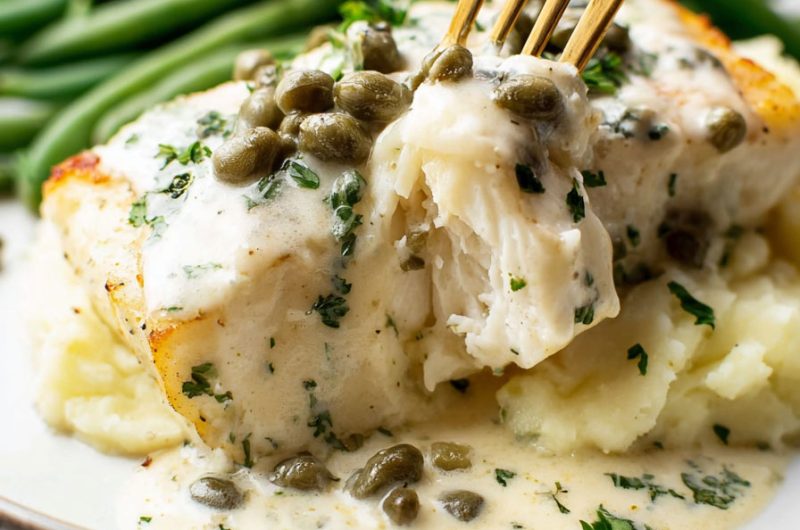
Return the halibut fillets to the pan. Spoon the sauce over each piece generously. Let everything cook together for another 3–5 minutes, until the fish is fully cooked and flakes easily with a fork.
Step 6: Garnish and Serve
Sprinkle with fresh parsley. Serve immediately, straight from the pan.
Pro Tips (From Experience)
Don’t overcook the halibut. This is the number one mistake people make with white fish. Overcooked halibut turns dry and rubbery fast. It’s done when it flakes easily with a fork and looks opaque all the way through. Pull it from the heat the moment that happens.
Pat the fish dry — seriously. I mentioned this above, but it’s worth repeating. Moisture is the enemy of a good crust. Take an extra 30 seconds with paper towels and you’ll notice the difference immediately.
Use good wine. Think of it this way — if you wouldn’t want to drink it in a glass, don’t put it in your sauce. The wine flavor concentrates as it reduces, so quality matters here.
Control the heat on your sauce. A gentle simmer is what you’re after. Too hot, and the cream breaks and looks greasy. Medium heat and a little patience go a long way.
Substitutions and Variations
Don’t have everything on hand? No problem. Here’s what you can swap:
- No white wine? Use chicken broth with an extra squeeze of lemon juice
- Want it lighter? Half-and-half works, but the sauce won’t be quite as rich
- Add veggies — spinach, asparagus, or even sun-dried tomatoes all work beautifully
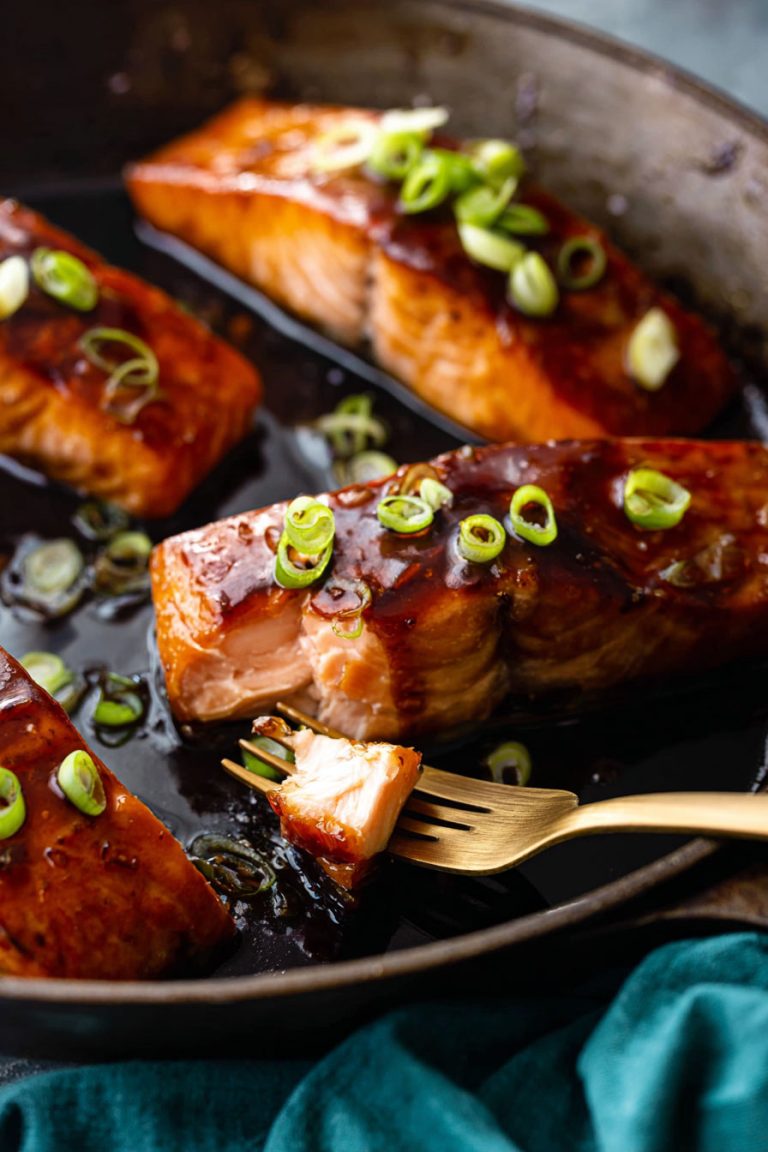
- Different fish — cod, sea bass, or salmon are all solid alternatives
- Like some heat? A pinch of red pepper flakes gives the sauce a nice subtle kick
What to Serve With It
You need something to soak up that sauce. Here are the best options:
- Creamy mashed potatoes — the classic pairing
- Buttered rice or risotto — soaks up the sauce perfectly
- Egg noodles or pasta — surprisingly good
- Steamed broccoli or green beans — for a lighter side
- Crusty bread — honestly, highly recommended. Don’t skip this.
Want to keep it light? A fresh green salad with a simple lemon vinaigrette balances the richness nicely.
Storage and Leftovers
Got leftovers? Here’s how to handle them:
- Fridge: Store in an airtight container for up to 2–3 days
- Reheating: Warm gently in a skillet over low heat. If the sauce thickens too much, add a small splash of cream or broth to loosen it up
- Freezing: Not recommended. Creamy sauces don’t freeze well — they separate and the texture suffers
Nutrition (Approximate)
| Nutrient | Per Serving |
|---|---|
| Calories | ~420 kcal |
| Protein | 34g |
| Fat | 28g |
| Carbohydrates | 6g |
Based on 4 servings. Values are approximate.
Creamy White Wine Halibut
4
servings10
minutes20
minutes~420
kcalAn easy, elegant seafood dish with tender halibut simmered in a rich garlic white wine cream sauce. Ready in just 30 minutes!
Ingredients
4 (6 oz) halibut fillets
1/2 tsp garlic powder
Salt & pepper to taste
1/2 tbsp flour + extra for dredging
3 tbsp butter, divided
3 cloves garlic, minced
1 cup heavy cream
1/3 cup dry white wine
1 tsp lemon juice
1/4 tsp herbs de Provence or Italian seasoning
1–2 tbsp capers, drained (optional)
1 tbsp fresh parsley, chopped
Directions
- Season the halibut with garlic powder, salt, and pepper. Lightly dredge in flour and shake off the excess.
- Heat 2 tablespoons of butter in a skillet over medium-high heat. Cook halibut for 3–4 minutes per side until golden. Remove and set aside.
- Add the remaining butter to the pan. Sauté the garlic for about 30 seconds until fragrant.
- Pour in the white wine and let it simmer for 1–2 minutes.
- Stir in the cream, lemon juice, herbs, and capers. Let the sauce gently bubble and thicken.
- Return the halibut to the skillet. Cook for another 3–5 minutes, spooning sauce over the fish as it cooks.
- Garnish with fresh parsley and serve immediately.